How We Built VSG Home Care a Website NDIS Families and Search Engines Both Understand
A case study on the website 074 Solutions built for VSG Home Care, a registered NDIS provider in Craigieburn — one page per support, one page per suburb, and plain-language guides for participants.
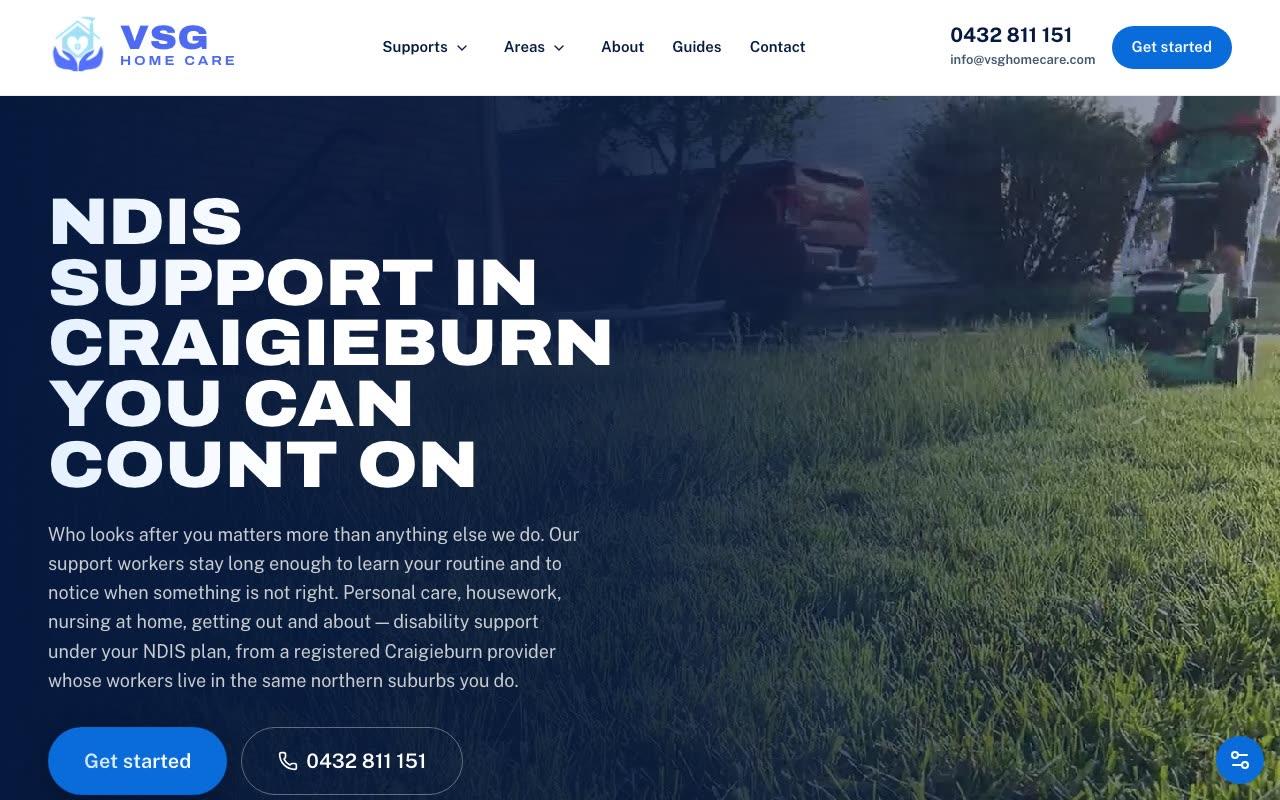
Choosing a support provider is a personal decision
When someone chooses an NDIS provider, they are deciding who comes into their home, who helps them shower, and who drives them to appointments. Families research that decision carefully, and most of that research starts with a search: "NDIS provider Craigieburn", "personal care near me", "how much does a support worker cost".
VSG Home Care is a registered NDIS provider whose support workers live in the same northern suburbs as their participants. The website had to make that clear quickly, in plain language, to people who are often tired of jargon.
Why most NDIS provider websites struggle
Most provider sites put every service on one long page and every suburb in one line of text. That works badly for people and for search engines. A family in Mernda looking for high intensity personal care has to dig for it. Google can't tell which suburbs the provider really covers. AI assistants have nothing clear enough to quote.
What we actually did
1. One page for every support
Personal care, high intensity care, community nursing, household tasks, shared living, community participation, life skills, transition support, group activities and transport each have their own page. Each page explains what the support is, who it suits and how it fits an NDIS plan. Every support becomes its own clear search result, not one line on a list.
2. One page for every suburb they serve
Craigieburn, Mickleham, Roxburgh Park, Greenvale, Epping, Wollert, Mernda, Broadmeadows, Sunbury and Glenroy each have a dedicated area page. A family searching for support in their suburb lands on a page written about their suburb.
3. Plain-language guides that answer the real questions
Guides on what an NDIS support worker costs, how to choose a provider in Melbourne, and what happens at a plan review. There is also an NDIS glossary. These are the questions families ask Google and ChatGPT before they ever phone a provider. Answering them clearly builds trust and gives AI search something accurate to cite.
4. Structured data search engines can read
LocalBusiness schema lists every suburb VSG Home Care serves, alongside website and FAQ schema. Google and AI tools can match the business to local searches with confidence instead of guessing.
5. Easy next steps on every page
The phone number sits in the header. Get started, booking and referral pages are one click away, and there is a dedicated accessibility page. Short videos on the home page and service pages show real support, not stock smiles.
The result
VSG Home Care now has a website built around the way NDIS families actually search: by support, by suburb, and by question. Every service and every area it covers has its own page that Google can rank and AI assistants can understand.
See it live: vsghomecare.com
The takeaway for any care or health provider
People researching care are looking for clarity and trust before anything else. A site structured around their questions, their suburb and the exact support they need serves them better, and search engines reward exactly the same structure.
074 Solutions builds SEO and AEO optimised websites for care providers and local service businesses. Tell us about the people you support and we will map what your website needs to reach them.